Oscilloquartz has integrated Galileo’s OSNMA authentication into its timing and synchronisation platforms, using u-blox GNSS technology, bringing a new level of trust and resilience to GNSS-based synchronisation for critical infrastructure.
Behind the seamless operation of modern society lies an invisible but essential element: precise and reliable timing. From synchronising 5G networks and power grids to timestamping financial transactions and managing data centres, Global Navigation Satellite Systems (GNSS) are at the heart of critical infrastructure. Yet, as reliance on GNSS grows, so does the risk of signal manipulation and spoofing.
To address these challenges, Oscilloquartz has introduced Galileo Open Service Navigation Message Authentication (OSNMA) in its OSA5412, OSA5422 and OSA5430/40 timing and synchronisation platforms—bringing authentication capabilities directly to GNSS timing services.

Oscilloquartz module integrating Galileo OSNMA for timing solutions
This has been achieved thanks to the integration of u-blox’s ZED-F9T high accuracy timing module, which incorporates advanced security features such as Galileo OSNMA or a robust anti-spoofing algorithm.
OSNMA: bringing trust to GNSS signals
“The introduction of Galileo OSNMA marks an important milestone for secure GNSS-based timing” said Samuli Pietilä, Director of Product Line Management, Timing and Infrastructure at u-blox.
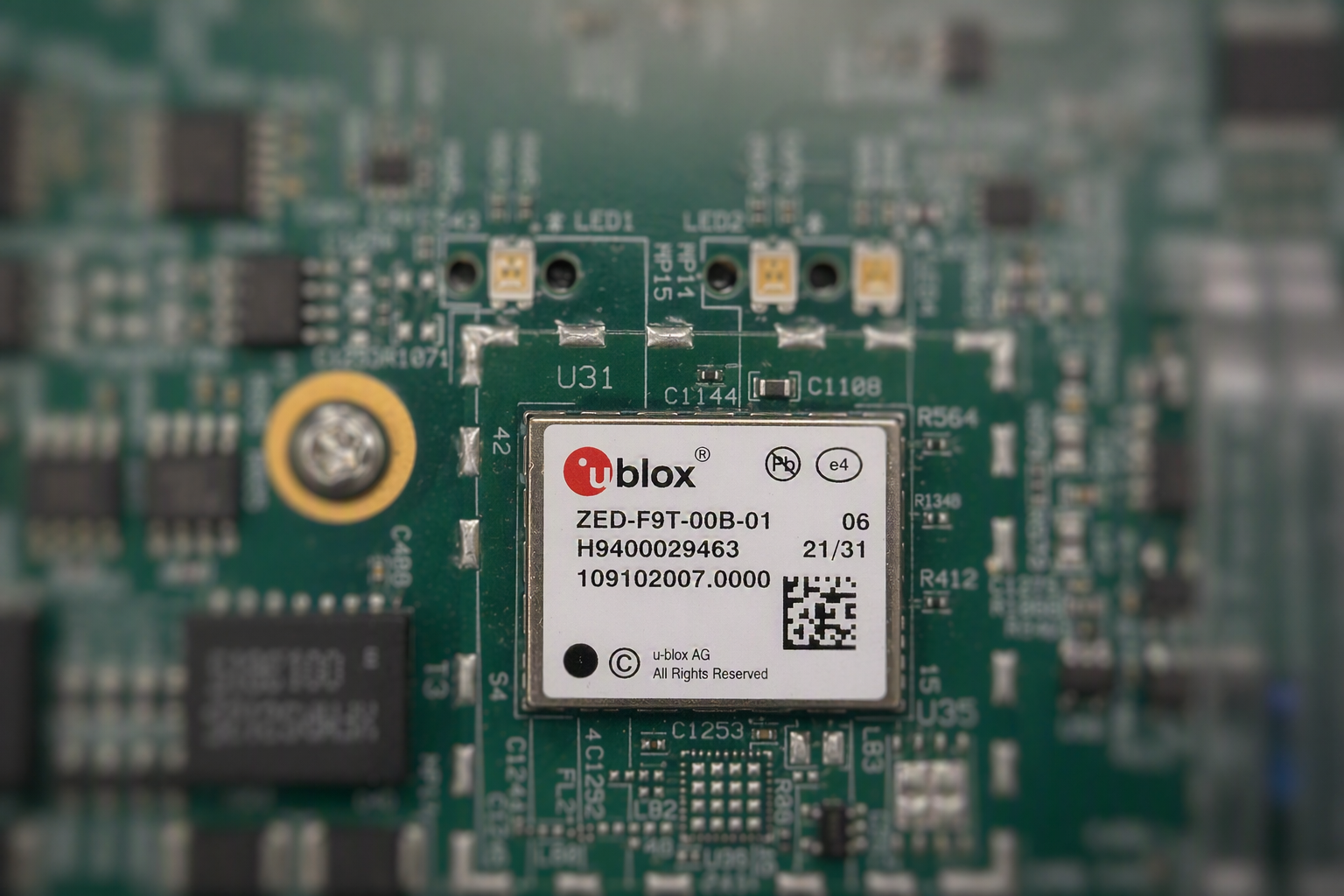
u-blox chipset capable of processing Galileo OSNMA
Galileo OSNMA, operational since July 2025, is the first civil GNSS authentication service, enabling users to verify that Galileo navigation messages are authentic and originate from actual Galileo satellites.
In this way, OSNMA introduces a new level of trust at the point of reception and becomes particularly relevant in an era where GNSS is being increasingly targeted by spoofing and signal manipulation attacks.
Strengthening resilience against spoofing and manipulation
With the integration of u-blox modules, Oscilloquartz becomes one of the first companies in the timing industry to adopt Galileo OSNMA, allowing operators to upgrade their systems via firmware and benefit from enhanced security without hardware changes or service interruption.
To further enhance protection, Oscilloquartz combines OSNMA with its Syncjack™ technology, which can detect record-and-replay attacks (also known as meaconing). This dual-layer approach improves the ability to identify subtle timing anomalies that may otherwise go unnoticed.
“These innovations help customers reduce operational risk, meet compliance requirements, and deliver more reliable services across sectors such as finance, telecom and energy”, commented Igal Pinhasov, VP of product line management at Oscilloquartz.
A critical enabler for modern infrastructure
Indeed, secure and reliable timing is a key requirement across multiple sectors, including telecommunications, energy distribution and finance. Any disruption or manipulation of timing signals can have significant operational and economic consequences.
By integrating Galileo OSNMA into its receivers, u-blox enables its customers to develop more resilient timing and synchronisation platforms, helping operators safeguard their networks and ensure continuity of service:
“Together with Oscilloquartz, we are enabling operators to benefit from authenticated Galileo signals and strengthen protection against evolving threats. This collaboration demonstrates how innovations across the European GNSS ecosystem can help deliver more trusted and resilient timing infrastructure”, added Mr Pietilä.
Towards a more secure GNSS ecosystem
The adoption of authenticated GNSS signals marks a turning point in the evolution of satellite navigation services. As solutions like OSNMA gain traction across industry, they pave the way for a more secure and resilient positioning, navigation and timing ecosystem.
The integration of Galileo OSNMA into timing and synchronisation platforms highlights the growing role of the European GNSS in addressing global security challenges and supporting the next generation of critical infrastructure.
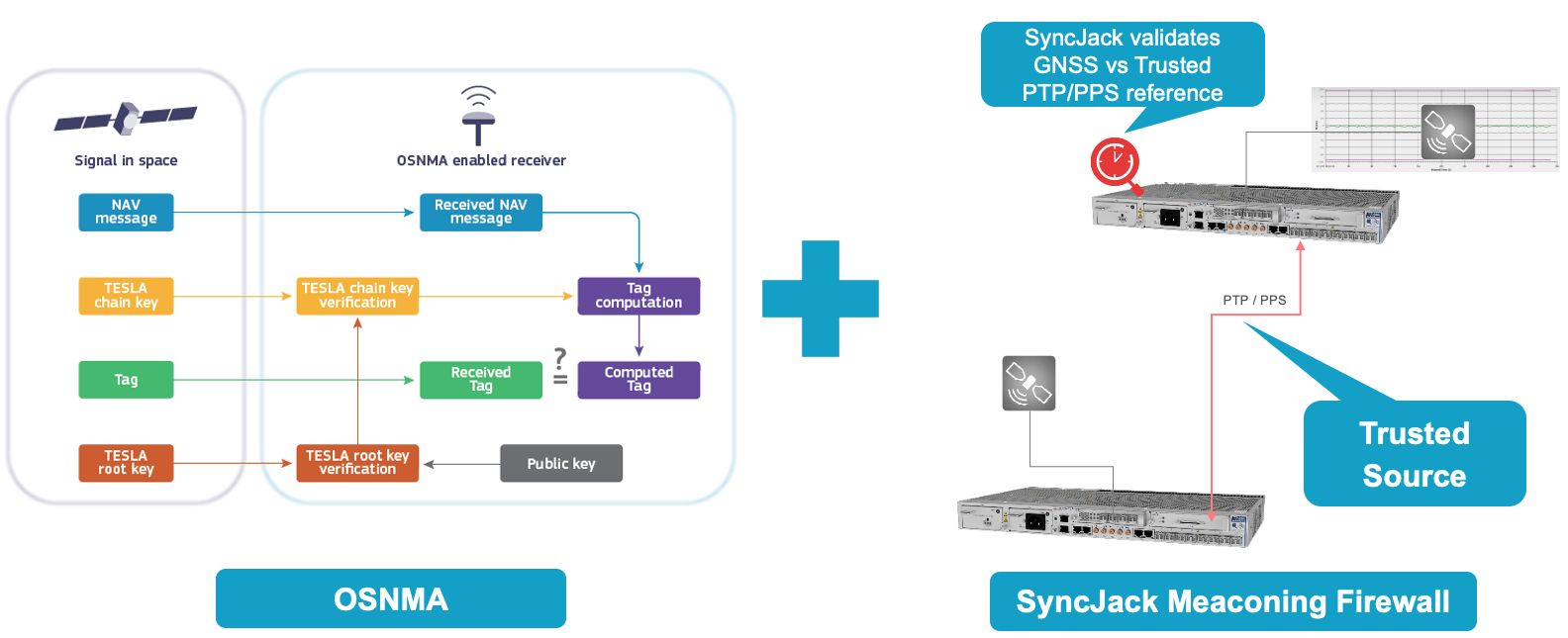
Oscilloquartz solution arquitecture for timing with integrated Galileo OSNMA
“From a system design perspective, OSNMA closes one of the key gaps in GNSS-based timing — the lack of signal authentication,” said Bartek Kropiewnicki, Senior Product Line Manager at Oscilloquartz. “Incorporating authenticated navigation messages into timing and synchronisation platforms significantly strengthens their ability to detect and mitigate spoofing attacks. This capability is becoming essential for critical infrastructure where timing integrity directly impacts service reliability”.
As Galileo OSNMA has reached its first year of operations, its integration into commercial solutions highlights the importance of continuing to expand the adoption of authenticated GNSS services. Strengthening trust in satellite navigation will remain essential to protecting critical infrastructure and building a more secure and resilient GNSS ecosystem.
About Galileo
Galileo, the EU´s Global Navigation Satellite System (GNSS), provides improved navigation, positioning and timing information. More than 4.5 billion users are already benefitting from Galileo.
The Galileo Programme is owned by the EU. The European Commission, as the Programme Manager, oversees the implementation of all activities. EUSPA is responsible for the operational management of the services, ensuring their availability, continuity and performance, and for the procurement of launch services required for the deployment and replenishment of the constellation. Galileo's system design and system evolution are entrusted by EUSPA to ESA.
Media note: This feature can be republished without charge provided the European Union Agency for the Space Programme (EUSPA) is acknowledged as the source at the top or the bottom of the story. You must request permission before you use any of the photographs on the site. If you republish, we would be grateful if you could link back to the EUSPA website (https://www.euspa.europa.eu).