 |
15 January 2024 The publication of an updated version of the Galileo OSNMA Internet Data Distribution (IDD) Interface Control Document (ICD) and the Certificate Practice and Certificate Practice Standards (CS/CPS), together with the OSNMA operational cryptographic material, will allow users and receiver manufacturers to finalize the implementation of the OSNMA protocol in advance of the OSNMA Initial Service provision phase.
|
 |
30 November 2023 The process to request a Galileo PRN Code is available at the GSC. It allows interested users to initiate the request for a PRN code by submitting the “Application for PRN Code Assignment” through the GSC HelpDesk (www.gsc-europa.eu).
|
 |
29 November 2023 A new version of the Galileo Open Service Signal In Space Interface Control Document is now available. This update includes the support to the new Extended Operations Mode (EOM). It introduces the ARAIM Integrity Support Message (ISM) within the I/NAV message transmitted in E1. It addresses links to the OSNMA ICD and NTCM documents, as well as a new Annex with the policy for the assignment of Galileo PRN codes for those GNSS planning to transmit Galileo-like signals.
|
 |
28 November 2023 An update of the Galileo Open Service Signal In Space Interface Control Document is now available. The main scope of this update is the inclusion of the improvements of the Open Service, accounting for the current constellation of operational satellites and updates in the ground infrastructure.
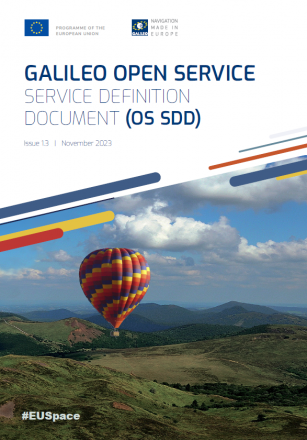
The “Galileo - Open Service - Service Definition Document” (Galileo OS SDD) defines the Minimum Performance Levels (MPLs) of the Galileo Open Service (OS).
|
 |
27 November 2023 Continuing from the combined survey model launched last year, this multiple-choice survey only takes a few minutes to complete but your contribution can have a huge impact on the future performance of EGNOS and Galileo.
The EGNSS User Satisfaction Surveys aim at collecting valuable feedback from current and potential users.
|
 |
23 November 2023 An update of the Galileo OSNMA Receiver Guidelines has been published. The scope of this update is the inclusion of examples of OSNMA Verifications (Annex A) and a first set of OSNMA test vectors (Annex B) as a complement to testing with the SiS.
|
 |
25 October 2023 An update of the Galileo OSNMA SIS ICD has been published. The main scope of this update is the inclusion of additional Message Authentication Code (MAC) sequences in the MAC look-up table. The addition of these MAC sequences was already planned and reflected in the previous OSNMA SIS ICD version (Annex C). These new sequences are the ones needed in the receiver to process the flexible (FLEX) MACs in the OSNMA signal during the on-going Public Observation Test Phase and the future service provision phase.
|
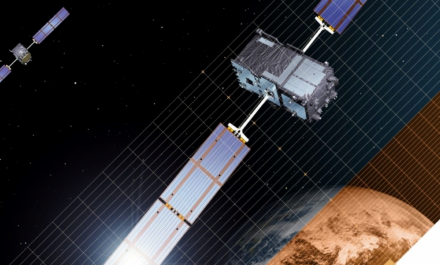 |
17 October 2023 The Galileo Open Service (OS) has been upgraded with three new features added to its I/NAV message, one of the four message types broadcast by Galileo satellites. Collectively referred to simply as “I/NAV improvements”, these features are now available to all Open Service users. On 12 August 2023, the gradual process of upgrading the operational Galileo FOC constellation satellites was finalized. The I/NAV improvements are openly accessible through the I/NAV message carried by the E1-B signal.
|
 |
21 September 2023 The Galileo Open Service (OS), the Galileo High Accuracy Service (HAS) and the Enhanced Search and Rescue (SAR) Service Performance Reports for Q2 2023 are available at the GSC Electronic Library.
|
 |
06 September 2023 The Galileo Open Service (OS) and the Enhanced Search and Rescue (SAR) Service Performance Reports of the first quarter of 2023 are available at the Electronic Library of the European GNSS Service Centre web portal.
|

