 |
15 February 2022 The European Union Agency for the Space Programme (EUSPA) is launching a testing campaign for INAV improvements implementation and hereby invites external stakeholders to express their interest in participating in such testing campaign.
|
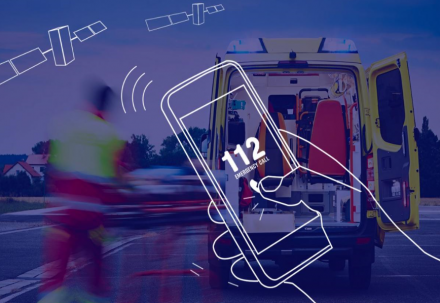 |
15 February 2022 As of March 17, 2022, all smartphones sold in the European Union should be leveraging Galileo signals, in addition to other Global Navigation Satellite Systems. The addition of the EU positioning system to enhance the 112-calls location will result in faster response times and consequently, more lives saved.
Galileo-supported E112 will result in faster response times and more lives saved
|
 |
24 January 2022 The Payload In Orbit Testing activities is the last stage of the Early Operations Phase. It will enable the Galileo satellites 27-28 to enter service provision and their signals to become available to end-users down on Earth.
The Galileo satellites orbit Earth at an altitude of 23,222 km
|
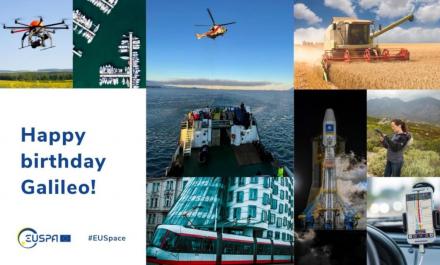 |
15 December 2021 On December 15th 2016 the Galileo Services were declared operational, marking a cornerstone in the field of satellite navigation for European citizens and worldwide. Since then, the EU Agency for the Space Programme has endeavored to increase the robustness of the system and services, enhance market adoption and offer new services to its users.
|
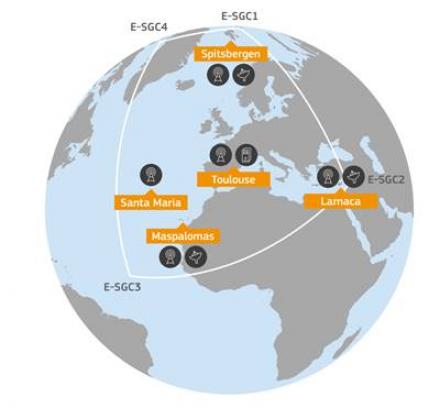 |
03 December 2021 As of 12/03/2021, the European GNSS Service Centre provides additional information regarding the operational status of the SAR/Galileo Service. Such communications, namely Notice Advisories to SAR/Galileo Users or NASUs, will provide up-to-date System status information that is relevant for users when using the SAR/Galileo Service.
|
 |
23 November 2021 The EU Agency for the Space Programme, EUSPA, is gathering input from industry and academia to define new funding priorities in view of Horizon Europe.
Horizon Europe will establish the Union’s space leadership in markets that best exploit its programme’s differentiators.
|
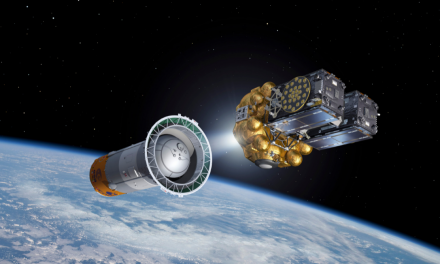 |
22 November 2021 We are less than two weeks away from the latest Galileo launch from the European Spaceport in Kourou, French Guyana. The Galileo Launch 11 is the first of a series of 6 launches (with two satellites per launch), and the EUSPA’s tightly-knit LEOP team is ready for a cooperative EU space mission!
|
 |
22 November 2021 The European Union Agency for the Space Programme (EUSPA) is opening the Galileo Open Service Navigation Message authentication (OSNMA) test Signal in Space (SiS) and access to related products as part of the Public Observation Test Phase. EUSPA is inviting external interested stakeholders to participate in this observation campaign.
OSNMA Public Observation open for interested users
|
 |
21 October 2021 On October 21, 2011 Europe took a major step in its space history by launching the first two operational Galileo satellites at 12h30 CET from Kourou, French Guiana. That day the EU came one step closer to having its own Global Navigation Satellite System.
A Soyuz rocket carrying the first two Galileo operational satellites.
|
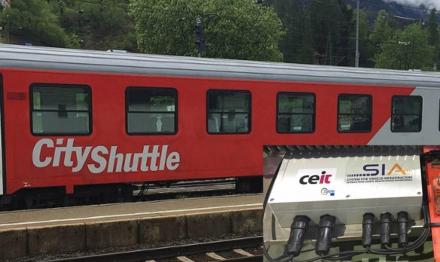 |
15 October 2021 Space based services will help reduce 15% of railway maintenance costs, 25% of maintenance unscheduled events and 15% of derailments associated with the rail-wheel interface. To tackle this challenge, the SIA consortium brings together multidisciplinary and cross sector partners (EGNSS technology providers, research centres, IT companies and railway stakeholders) that will co-design EGNSS solutions truly adapted to the needs of the rail sector.
|

